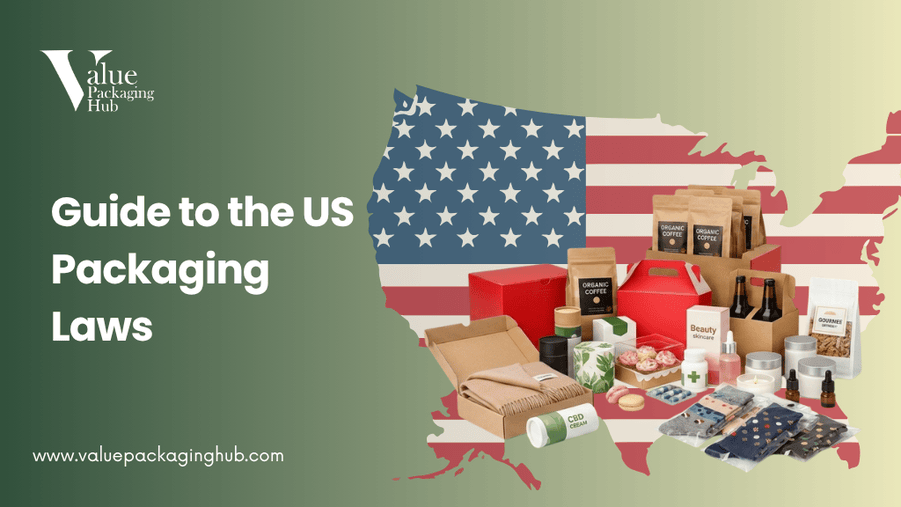
US Packaging Laws and Regulations Guide
Let’s be honest—most businesses don’t think about legal rules when designing packaging. They focus on colors, branding, and how attractive the box looks. But here’s the problem: if your packaging doesn’t follow packaging laws and regulations, none of that design effort matters.
In the United States, packaging is closely monitored. This is not only for safety but also for honesty and how it affects the environment. Even a small mistake like missing some details on a label can cause problems for the companies that make these products.
The good thing is that once you understand how these rules work, everything starts to make sense. You do not need to remember all the laws. You just need to understand what the rules for packaging are trying to do.
In this blog, we will cover a complete guide to US packaging laws and regulations, including crucial civil laws, state- level conditions, labeling rules, environmental packaging regulations, material restrictions, and why compliance is essential for erecting trust and avoiding legal pitfalls.
Key Takeaways
- Packaging laws in the US come from both federal and state levels
- Clear labeling is not optional—it’s required
- Food and health-related packaging follow stricter rules
- Environmental regulations are becoming more serious
- Compliance helps build trust, not just avoid penalties
- Smart packaging decisions save money in the long run
Key Federal Packaging Laws and Regulations in the US
When people talk about packaging regulations in the US they are usually referring to laws first. These federal laws apply everywhere in the United States. Create a basic structure that all businesses must follow.
Fair Packaging and Labeling Act (FPLA)
This law is really about honesty. It exists to make sure customers are not confused or misled when buying a product. Think about it from a customer’s perspective. If you pick up a product, you expect to know what it is, how much you’re getting, and who made it. That’s exactly what this law enforces.
So when we talk about labeling rules for consumer products USA, this is one of the main laws behind it. It keeps things fair and transparent.
Poison Prevention Packaging Act (PPPA)
This one is more about safety than information. If a product can be dangerous—like medicine or cleaning chemicals—it must be packaged in a way that children cannot easily open it.
It might seem like a small detail, but it’s a serious requirement under us packaging compliance requirements. Businesses that ignore this can face major penalties.
Uniform Packaging and Labeling Regulation (UPLR)
Now this is where consistency comes in. Imagine if every state used a different way to display product weight or size. It would confuse both businesses and customers.
UPLR solves that problem by standardizing how information is shown. It supports consistent US packaging standards, which makes life easier for everyone.
FDA Packaging Laws and Regulations
If your product is something people eat, apply to their skin, or consume in any way, the FDA becomes involved.
To explore the official standards in more detail, it’s worth reviewing the FDA’s guidelines on food labeling and packaging requirements.
The people who check the packaging regulations do not just look at the product; they also check the packaging materials. The goal of the packaging regulations is to make sure that nothing transfers from the packaging to the product.
State-Level Packaging Regulations
Here’s where things get slightly more complicated.
The federal laws apply everywhere. States can add their own rules, especially around environmental issues. California is usually ahead when it comes to regulations.
California Packaging Laws
California is usually ahead when it comes to making rules. They care a lot about reducing waste, making things more recyclable, and using plastic. If your product is sold in California, you will likely need packaging standards. This is why environmental packaging regulations US often start with California.
Maine EPR Law
Maine introduced something called Extended Producer Responsibility.
In simple terms, businesses are responsible for what happens to their packaging after customers throw it away.
This concept is part of the extended producer responsibility USA packaging, and it’s slowly spreading to other states.
Other State Regulations
States like New York and Oregon are also making rules.
They are focusing more on how to recycle things. These changes fall under recycling laws for packaging in the US.
So if you are selling products across states, you cannot rely on one standard.
Labeling Requirements for Packaging
This is where most businesses make mistakes—not because it’s difficult, but because it’s detailed.
Product Labeling Rules
Every product must clearly show basic information. That includes product name, quantity, ingredients, and manufacturer details. These are part of us labeling requirements for packaging, and even small errors can cause compliance issues.
Country of Origin Labeling
If your product is made outside the US, you must mention where it comes from.
Customers actually care about this more than brands realize. It also falls under country of origin labeling requirements US, which makes it legally required.
Warning Labels and Safety Information
Some products need warnings. Not suggestions—actual required labels. This applies to electronics, chemicals, and certain consumer goods. These rules fall under federal packaging regulations USA and must be followed carefully.
Sustainability and Environmental Regulations
This is the fastest-changing part of packaging right now.
Recycled Content Requirements
Many states are encouraging or requiring the use of recycled materials. This supports eco-friendly packaging compliance in the US and helps reduce waste.
Plastic Bans and Restrictions
Single-use plastics are being reduced step by step. These plastic packaging laws USA are pushing businesses toward better alternatives.
Heavy Metal Restrictions
Certain materials are simply not allowed. Packaging must not contain harmful substances like lead or mercury. This is part of packaging material restrictions USA.
Environmental Claims and Labeling
You can’t just label your packaging as “green” without proof. Claims must be accurate under sustainable packaging regulations USA, or they can lead to penalties.
Explore sustainable packaging options at Value Packaging Hub.
Packaging Material Regulations
Different industries have different expectations.
Food Packaging Materials
Food packaging must be safe for direct contact. That’s why food packaging regulations US are strict. Materials need to be tested and approved.
Explore sustainable packaging options at Value Packaging Hub.
Pharmaceutical and Cosmetic Packaging
These products require extra protection. Tamper-proof packaging is common here, and compliance with us fda packaging regulations is essential.
Child-Safe Packaging Requirements
If there is any risk to children, the packaging needs to be designed so kids cannot get to the product. This is especially important for medicines and chemicals.
Packaging Symbols and Compliance Marks
Those small symbols on packaging are easy to ignore, but they matter. They tell customers whether something is recyclable, safe, or properly labeled. These are part of US product packaging guidelines, and they help customers make informed choices.
Why Compliance Actually Helps Your Brand
Most people see regulations as restrictions. In reality, regulations can work in favor of your business. Clear & safe packaging builds trust with customers.
Customers feel buying from brands that look professional and responsible, that look like they know what they are doing. That is why businesses often work with experts like Value Packaging Hub to get the packaging from the start.
Conclusion
US packaging laws might seem hard to understand at first. They are there for a reason. They protect customers. They make sure things are fair and push businesses to be better and more responsible.
Once you understand the basics of US packaging laws, it becomes much easier to follow the rules. It is actually good for your business. In the end, good packaging is not about how it looks.
It is about trust and safety and having long-term success, the success of your business, the success of your products, and the success of Pharmaceutical and Cosmetic Packaging.
Frequently Asked Questions
What packaging regulations apply in the United States?
They include federal laws like FPLA, PPPA, FDA rules, along with state-level environmental regulations.
Do small businesses need to follow US packaging regulations?
Yes, these laws apply to all businesses, regardless of size.
What are the rules for food packaging in the US?
Food packaging must use FDA-approved materials and meet strict safety standards.
Are recycling labels mandatory on packaging?
Not everywhere, but some states require them.
Are packaging laws the same in every US state?
No, federal laws apply nationwide, but states may add their own requirements.