Best Packaging Materials for US Businesses: A Buyer’s Guide
The wrong packaging material costs you twice – once when it fails to protect your product, and again when it drives customers away. The US packaging market is valued at $215.32 billion in 2025 and is forecast to reach $319 billion by 2035 — and the businesses winning in that market are the ones making smarter, more deliberate packaging material decisions. Whether you’re choosing packing materials for ecommerce shipping, retail presentation, or food service, this guide breaks down every major option so you can match the right material to your product, your brand, and your budget.
Key Takeaways
- Paper and paperboard now command approximately 40% of the US packaging market in 2025, driven by recyclability, cost-effectiveness, and regulatory support for sustainable materials.
- Corrugated fiberboard is the most widely used structural packaging material for shipping in the USA — offering the best strength-to-weight ratio of any packing material at scale.
- Kraft paper is one of the fastest-growing sustainable packaging materials, valued at $5.8 billion in 2023 and projected to reach $7.5 billion by 2032.
- Foam packaging and bubble wrap remain the dominant protective inner materials for fragile goods — but biodegradable alternatives are gaining ground fast.
- The biodegradable materials segment is the fastest-growing in the US packaging market, driven by plastic reduction policies and consumer preference for eco-friendly packaging materials.
- Choosing the right packaging material depends on five factors: product type, weight, fragility, shipping distance, and brand positioning.
What Are Packaging Materials?
Packaging materials are the physical substances used to contain, protect, present, and ship products throughout the supply chain — from the manufacturing floor to the customer’s hands. They include both structural materials (what the box or container is made from) and protective inner materials (what cushions and secures the product inside).
Every product packaging decision starts with material selection. Get it wrong and you pay in damage rates, returns, customer complaints, and brand perception. Get it right and your packaging becomes a competitive advantage — protecting your product, reducing shipping costs, and reinforcing your brand every time a customer opens a box.
Packaging Materials Comparison
| Material | Best For | Cost |
| Corrugated Fiberboard | Shipping, e-commerce, heavy products | Low |
| Kraft Paper | Wrapping, void fill, retail bags | Low |
| Cardboard Boxes | Retail packaging, light shipping | Low–Mid |
| Foam Packaging | Fragile, high-value products | Mid |
| Bubble Wrap | Light fragile items, inner protection | Low |
| Rigid Paperboard | Luxury, premium presentation | High |
| Biodegradable Materials | Eco-conscious brands | Mid–High |
7 Most Common Packaging Materials for US Businesses
1. Corrugated Fiberboard
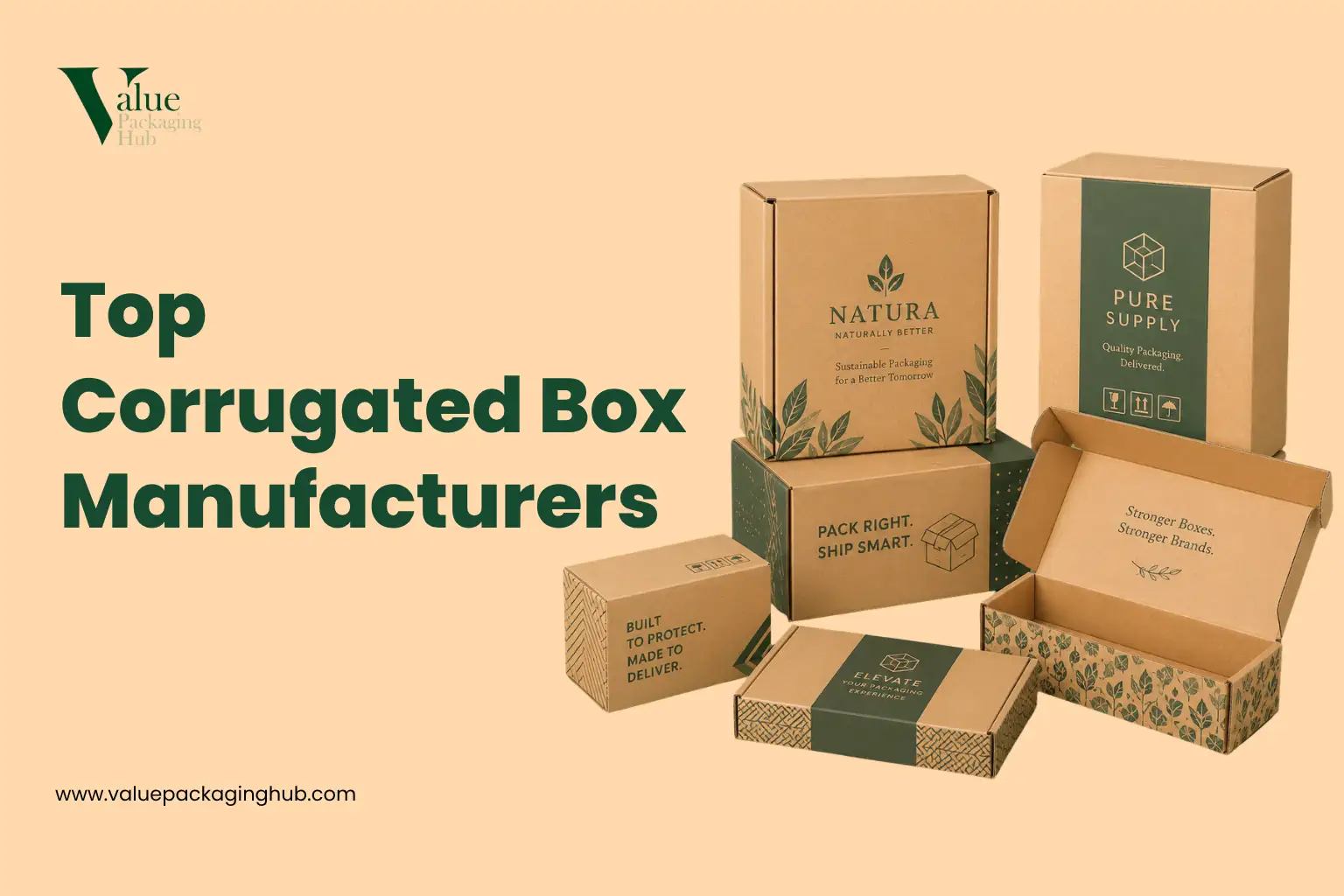
Corrugated fiberboard — commonly called corrugated cardboard — is the backbone of US product packaging and shipping. It consists of a fluted inner layer sandwiched between two flat linerboards, giving it exceptional crush resistance and structural strength at a low weight. Paper and paperboard products commanded 28.70% of the US packaging market share in 2025, driven by high corrugated volumes.
Corrugated fiberboard is available in single-wall, double-wall, and triple-wall constructions — each progressively stronger for heavier or more fragile products. It’s the default packing material for ecommerce fulfillment, food and beverage shipping, industrial goods, and retail-ready packaging. Value Packaging Hub’s custom corrugated boxes are available with full custom printing, low MOQ, and free USA delivery.
Best for: Ecommerce shipping, heavy products, food and beverage, industrial goods, retail-ready packaging.
2. Kraft Paper
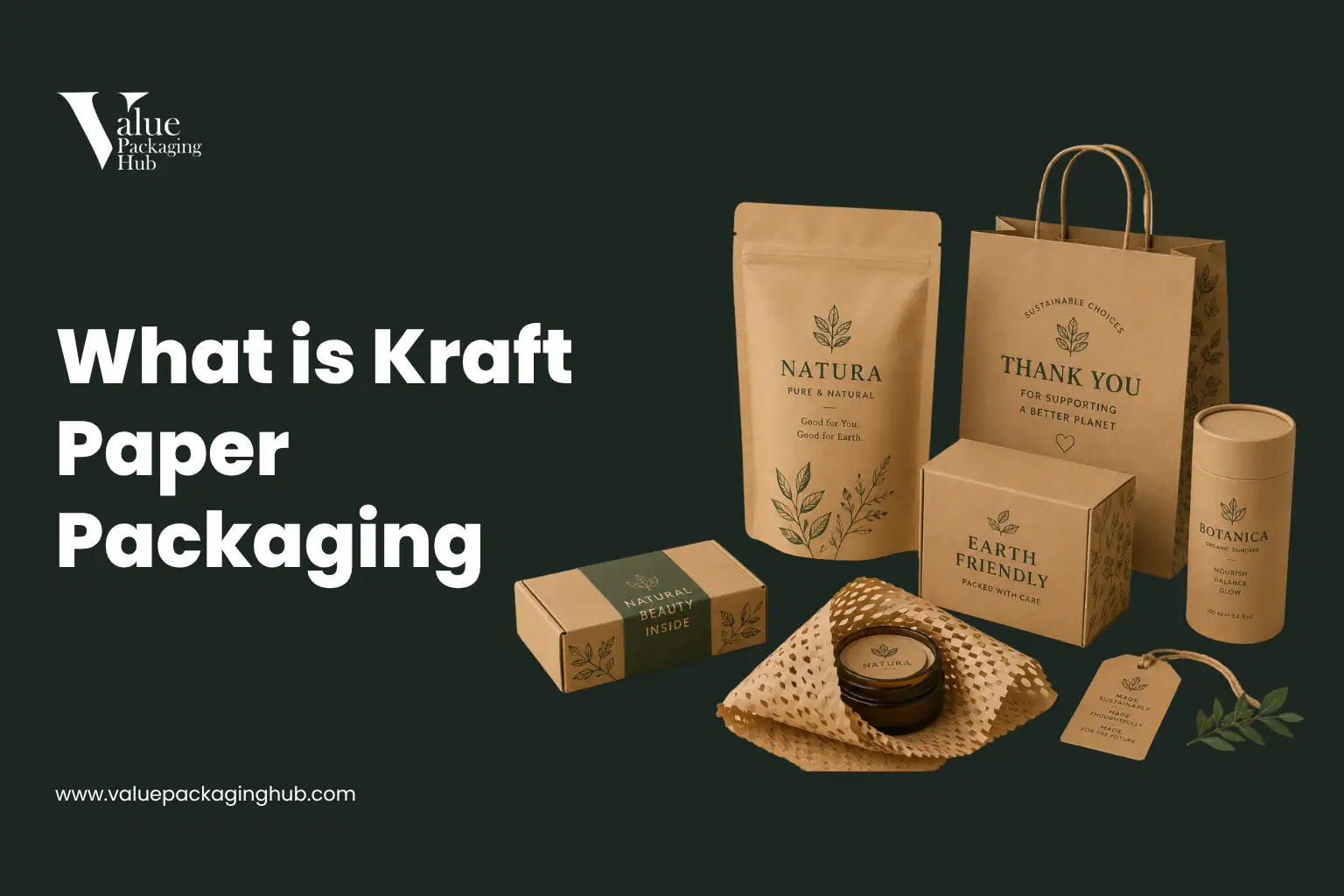
Kraft paper is produced through the kraft pulping process — a manufacturing method that preserves long wood fibers, giving the paper exceptional tear resistance and flexibility. It’s the sustainable packaging material of choice for US brands moving away from plastic, available as wrapping paper, void fill, bags, mailer liners, and outer packaging.
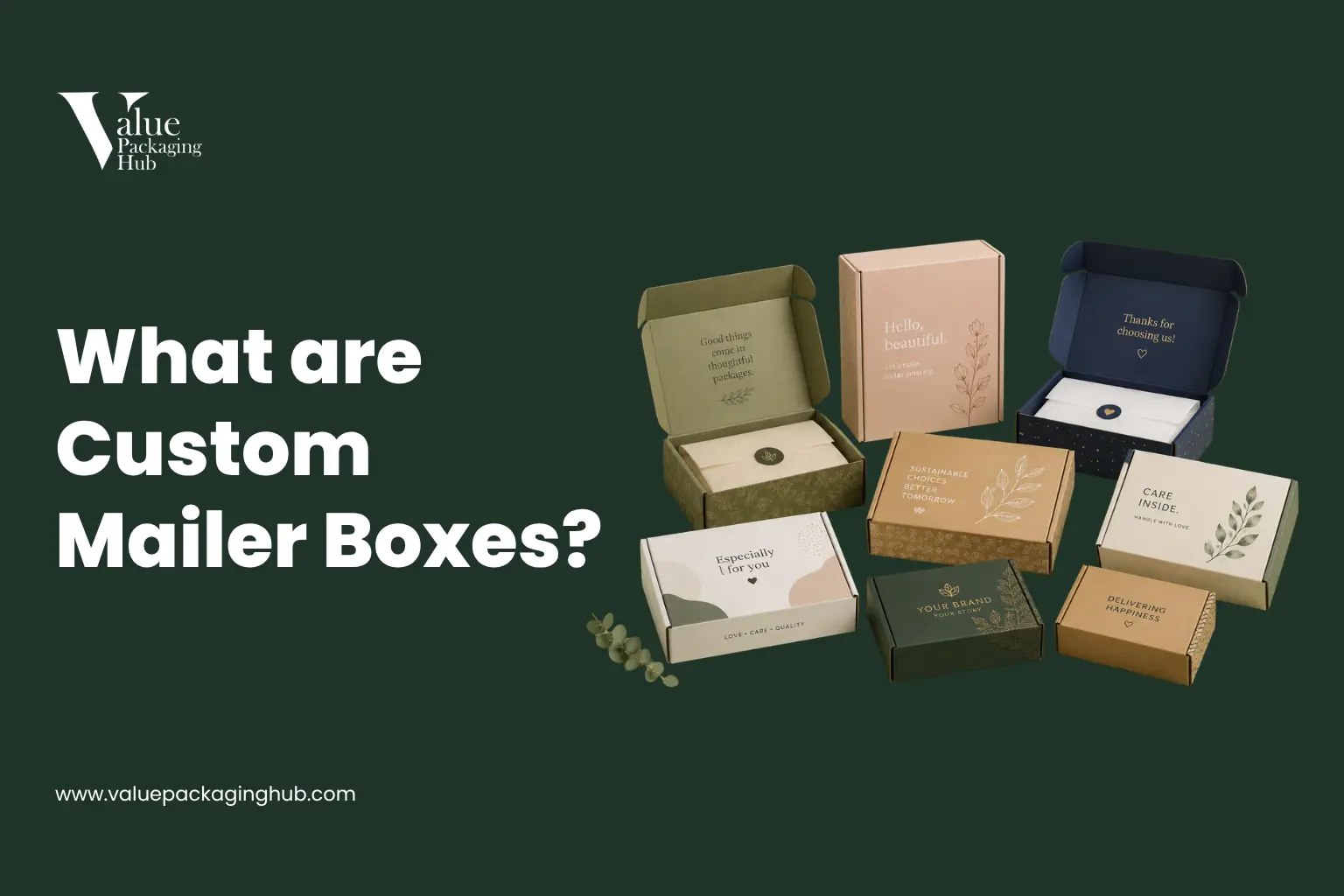
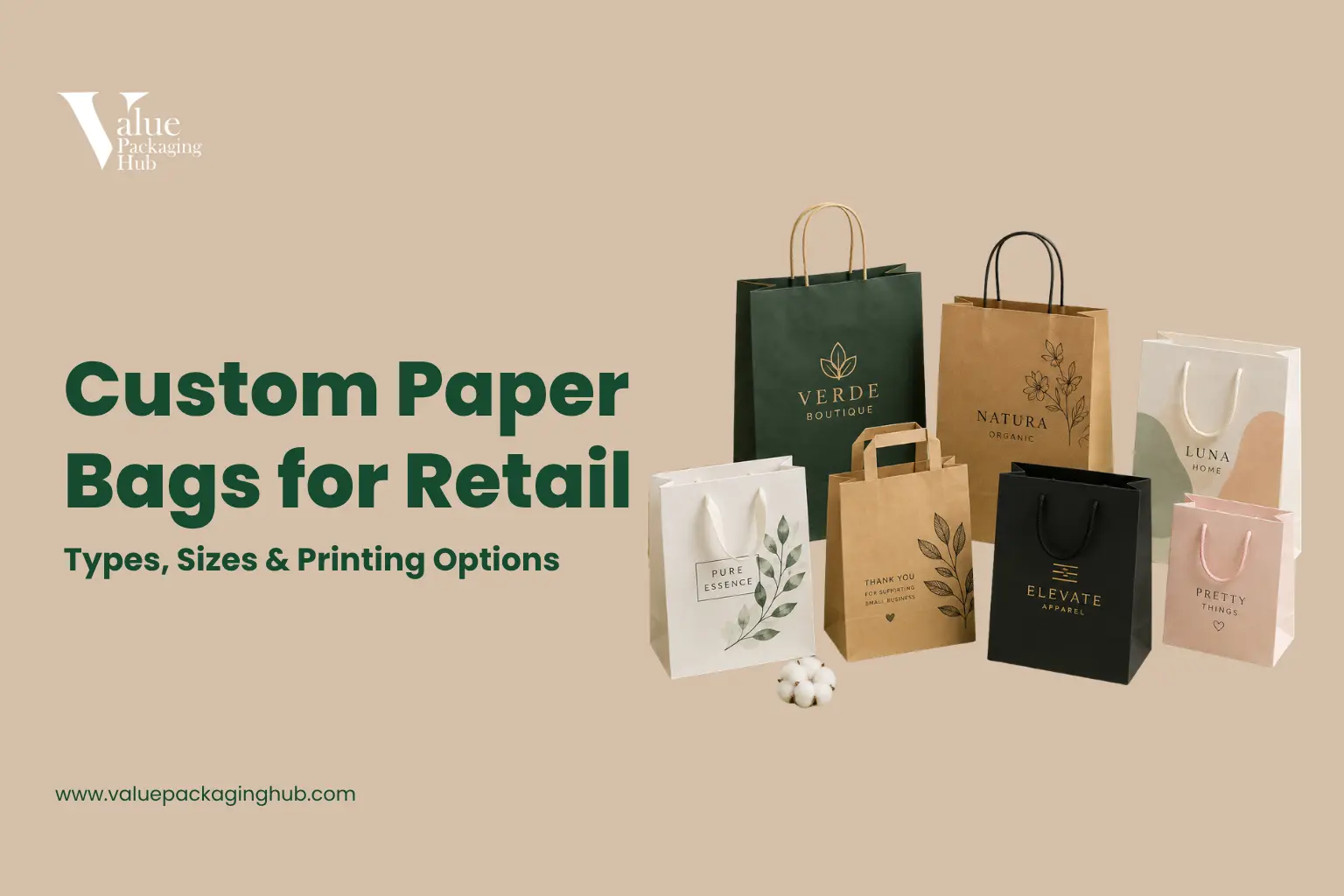
Eco-friendly kraft paper was valued at $5.8 billion in 2023 and is projected to grow to $7.5 billion by 2032 — making it one of the fastest-growing packaging material categories in North America. It’s fully recyclable, biodegradable, and printable, making it ideal for brands that want sustainable packaging materials without sacrificing brand presentation. Explore Value Packaging Hub’s kraft paper bags and kraft mailer boxes for retail and ecommerce applications.
Best for: Retail bags, void fill, wrapping, eco-conscious brands, food packaging, mailer boxes.
3. Cardboard Boxes (Folding Cartons)
Cardboard boxes — technically folding cartons made from solid bleached sulfate (SBS) or coated unbleached kraft (CUK) paperboard — are the dominant secondary packaging material for consumer products. They’re used across cosmetics, pharmaceuticals, food, retail, and subscription boxes. Unlike corrugated fiberboard, folding cartons are not fluted — they’re single-ply rigid paperboard that provides structure and a premium print surface.
SBS paperboard delivers sharp, full-color print quality ideal for retail shelf packaging where visual impact drives purchase decisions. Custom cardboard boxes from Value Packaging Hub are available with finishes including matte lamination, gloss lamination, foil stamping, spot UV, and embossing.
Best for: Cosmetics, pharma, food retail, subscription boxes, premium consumer products.
4. Foam Packaging
Foam packaging — primarily expanded polystyrene (EPS) and polyethylene foam — provides the highest level of product protection available in packing materials. Its closed-cell structure absorbs impact and vibration, making it the material of choice for electronics, medical devices, glassware, and high-value goods that must survive transit without damage.
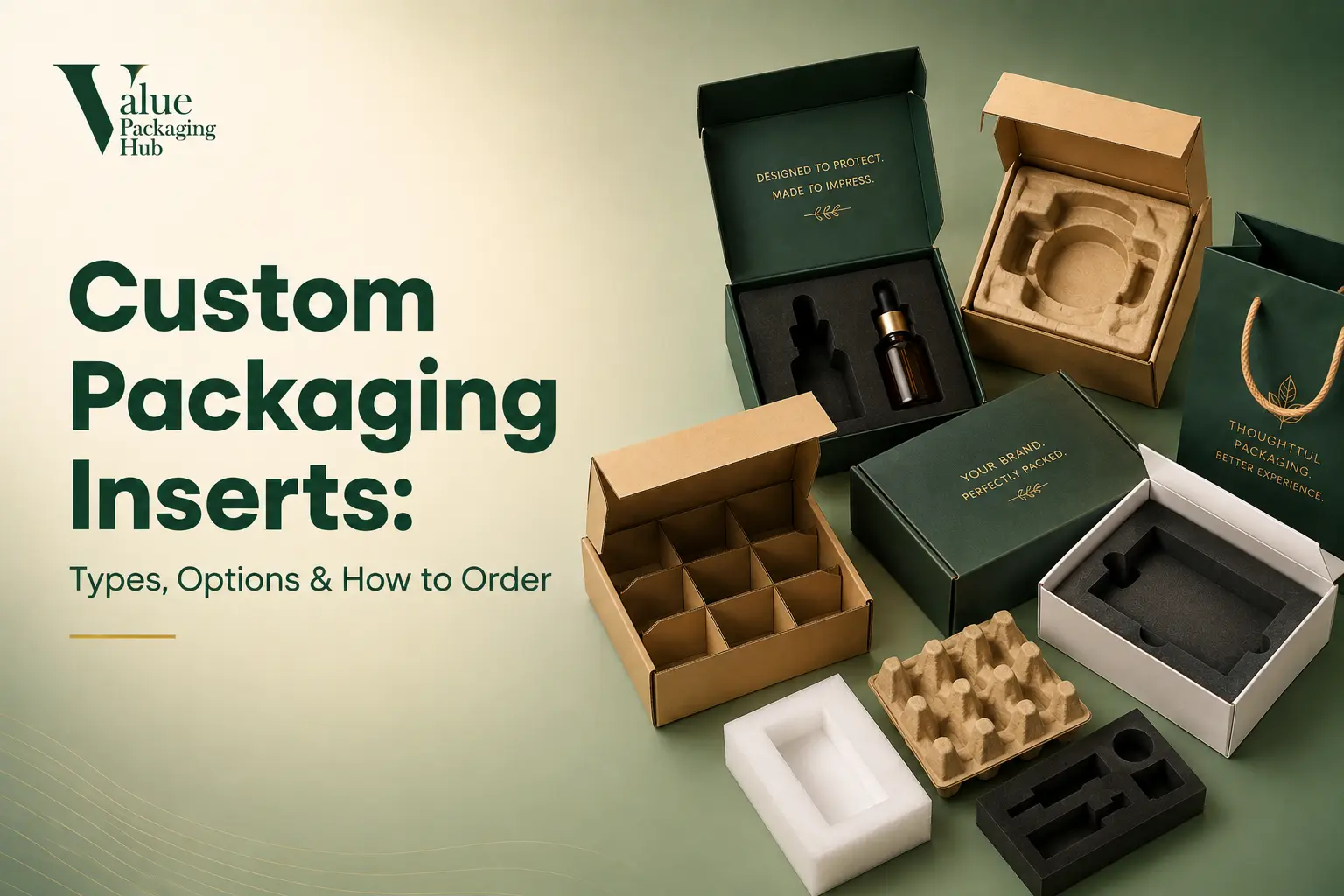
Custom foam inserts molded to the exact shape of a product hold it securely in place and eliminate movement during shipping — dramatically reducing damage rates compared to loose void fill. The primary disadvantage is sustainability: EPS foam is difficult to recycle and increasingly restricted under US state-level packaging regulations. Biodegradable foam alternatives made from mushroom mycelium and cornstarch are growing in adoption as US brands phase out traditional foam packaging.
Best for: Electronics, medical devices, fragile glassware, luxury products, high-value goods.
5. Bubble Wrap
Bubble wrap — a flexible plastic film with air-filled bubbles — is the most recognizable protective packing material in US shipping. It cushions light-to-medium fragile items against impact and is cost-effective for inner protection across ecommerce, retail, and fulfillment operations. Standard bubble wrap is not recyclable through curbside programs, though many US retailers accept it at in-store drop-off points.
For US brands committed to sustainable packaging materials, paper bubble wrap — a honeycomb kraft paper alternative — provides comparable cushioning with full recyclability and a premium unboxing feel. It’s increasingly replacing traditional bubble wrap in ecommerce packaging as brands respond to both consumer expectations and state-level plastic restrictions.
Best for: Light fragile items, inner cushioning, ecommerce void fill, secondary protection.
6. Rigid Paperboard (Luxury Packaging)
Rigid paperboard boxes — made from dense chipboard — are the premium tier of packaging materials for US brands. Premium rigid paperboard packaging hit $4.2 billion in 2023 and is forecast to reach $5.4 billion by 2032, driven by luxury branding and high-end product presentation. They’re non-collapsible, heavyweight, and engineered to communicate quality through structure and weight alone before the product is even seen.
Used for luxury cosmetics, jewelry, electronics, premium gifting, and high-end DTC brands, rigid boxes typically feature magnetic closures, ribbon pulls, and custom foam or cardboard inserts. Value Packaging Hub’s kraft rigid boxes deliver the premium unboxing experience luxury buyers expect with free design consultation and low MOQ.
Best for: Luxury cosmetics, jewelry, electronics, premium gifting, high-end DTC brands.
7. Eco-Friendly and Biodegradable Packaging Materials
Sustainable packaging materials have moved from a niche preference to a mainstream procurement requirement for US businesses. Paper and paperboard grew at a 5.33% CAGR and are expected to continue outpacing plastic in growth through 2031, as regulatory pressure from state-level Extended Producer Responsibility statutes and consumer expectations drive material switching across industries.
The leading eco-friendly packaging materials available to US businesses today include recycled corrugated fiberboard, FSC-certified kraft paper, biodegradable mylar bags, mushroom-based foam alternatives, compostable mailers, and plant-based films. Value Packaging Hub’s sustainable packaging range covers all major eco-friendly formats with free delivery across the USA. For recognized US recyclability standards and labeling guidance, the How2Recycle program is the most widely used consumer-facing framework for US brands making sustainability claims. For regulatory context on sustainable packaging requirements, the EPA’s sustainable materials management guidance provides the definitive US government reference.
Best for: Ecommerce brands, food service, cosmetics, any business targeting eco-conscious US consumers.
How to Choose the Right Packaging Material: Step-by-Step
- Define your product’s protection needs — Is it fragile, heavy, liquid, perishable, or high-value? Fragile items need foam or rigid board. Heavy items need double-wall corrugated. Light soft goods need only a poly mailer or kraft bag.
- Set your sustainability requirements — Define upfront whether you need recyclable, compostable, FSC-certified, or recycled-content materials. This narrows your material options before cost is considered.
- Match material to brand positioning — Mass and budget brands prioritize cost-efficiency with standard corrugated or kraft. Premium brands invest in rigid paperboard with premium finishes. Eco brands choose kraft, recycled corrugated, or biodegradable alternatives.
- Calculate total shipping cost — Packaging material weight directly affects dimensional weight pricing from FedEx and UPS. Lighter materials like kraft paper and single-wall corrugated reduce per-shipment costs at scale.
- Request samples before committing — Always validate material strength, print quality, and structural integrity before placing a full production order. Value Packaging Hub provides free 3D samples and a free quote for all custom packaging orders.
Conclusion
Choosing the right packaging materials isn’t a one-size-fits-all decision — it depends on your product, your brand, your customers, and increasingly, your sustainability commitments. Corrugated fiberboard dominates shipping. Kraft paper leads sustainable options. Rigid paperboard commands the premium tier. Foam and bubble wrap protect fragile goods. And biodegradable materials are the fastest-growing segment in the entire US packaging market. Value Packaging Hub supplies custom packaging across all major material types with free delivery across the USA, free 3D samples, free design consultation, low MOQ, and discounts on bulk orders. Get a free quote today.