What Is Kraft Paper Packaging and Why Use It?
Plastic is losing ground — and businesses are paying attention. With over 70% of consumers now actively seeking eco-friendly packaging when they shop, the pressure on brands to make smarter material choices has never been higher. Kraft paper packaging has emerged as one of the most compelling answers: strong enough to protect products through the roughest shipping conditions, sustainable enough to align with modern environmental values, and versatile enough to serve industries from food and beverage to automotive and construction. If you’ve been wondering whether kraft paper is the right move for your business, here’s everything you need to know.
Key Takeaways
- Kraft paper packaging is made using the “kraft pulping process,” which preserves long wood fibers for exceptional tear resistance and durability — making it stronger than most conventional paper.
- It is fully recyclable, biodegradable, and sourced from renewable wood pulp, making it one of the most eco-responsible packaging materials available today.
- Common kraft packaging formats include brown rolls for wrapping, corrugated boxes, brown box tape, and multi-layer industrial bags.
- Industries including food and beverage, e-commerce, pharmaceuticals, cosmetics, and manufacturing rely on kraft paper packaging daily.
- The kraft paper market is projected to reach $14.24 billion by 2030, reflecting accelerating global demand for sustainable alternatives to plastic.
- Businesses that switch to recycled packing solutions like kraft paper often reduce material costs while simultaneously strengthening their brand’s sustainability image.
What Is Kraft Paper Packaging, Exactly?
Kraft paper packaging refers to any packaging product made from kraft paper — a robust, naturally brown material produced through the “kraft pulping process.” The word “kraft” is German for “strength,” and the name is well earned. During manufacturing, wood chips are processed in a high-pressure digester that removes brittle lignin while preserving long cellulose fibers. The result is a paper with exceptional tensile strength, tear resistance, and flexibility that ordinary paper simply cannot match.
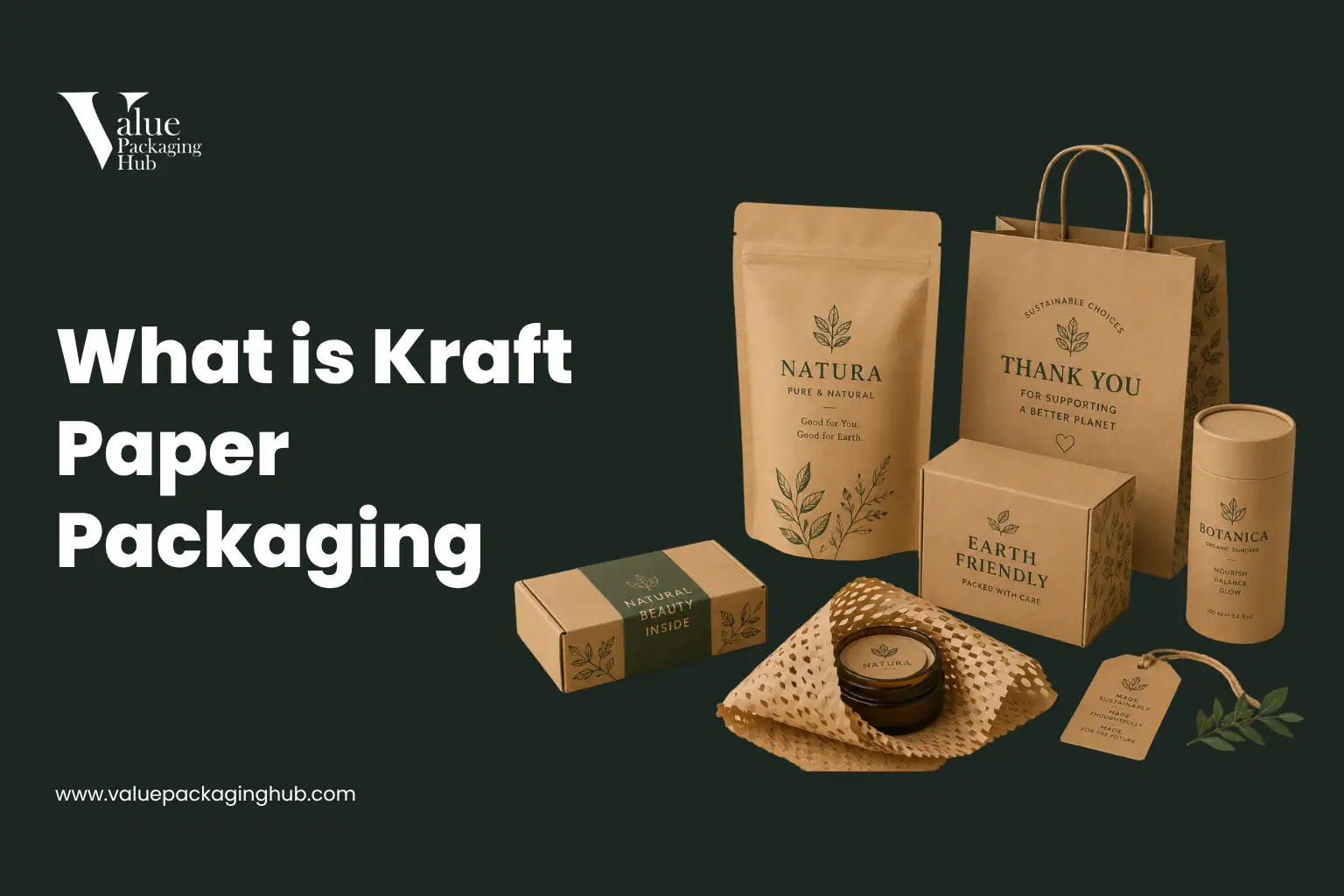
In practical terms, kraft paper packaging shows up in many forms: brown roll for wrapping products before shipping, multi-layer industrial bags for heavy goods, corrugated box liners, envelopes, pouches, and brown packing tape used to seal shipments securely. Whether unbleached (that familiar natural brown) or bleached for a cleaner look, kraft paper is built to protect.
At Value Packaging Hub, we work with businesses across every industry to deliver kraft packaging formats tailored to their exact needs — shipped free anywhere in the USA.
Why Kraft Paper Packaging Is the Smart Eco Choice
Sustainability isn’t a marketing buzzword anymore — it’s a business requirement. A 2025 Sustainable Packaging Consumer Report found that 90% of consumers are more likely to purchase from a brand that uses eco-friendly packaging. Kraft paper meets that expectation head-on.
Here’s why it leads the pack in recycled packing solutions:
- Biodegradable: Kraft paper breaks down naturally without leaving harmful residues in soil or water.
- Recyclable: It enters standard paper recycling streams with ease, as long as it contains no plastic laminations.
- Renewable source material: Wood sourced from FSC-certified sustainable forests can reduce carbon emissions by up to 30%, making responsibly produced kraft paper a measurably greener choice.
- Low-chemical production: The kraft process uses fewer chemicals than conventional papermaking and recycles them efficiently, reducing the environmental footprint at the source.
Businesses switching from plastic to brown wrapping for shipping don’t just reduce waste — they send a clear signal to customers that their values align. That signal matters more than ever in 2025. According to the U.S. EPA’s Sustainable Packaging guidelines, shifting toward lightweight, recyclable materials like kraft paper helps companies reduce waste while recovering economic value — making it a sound business decision as much as an environmental one.
What Products Can Be Packaged Using Kraft Paper?
Kraft paper’s versatility is one of its most underappreciated qualities. Its applications extend across bags, envelopes, tapes, multi-layer sacks, corrugated structures, and packaging for large-volume products — covering everything from delicate retail goods to heavy industrial materials.
Here’s a snapshot of what kraft paper packaging handles well:
Food items:
Sandwich wraps, takeout containers, bakery bags, produce pouches — explore our Kraft Take Out Boxes and Kraft Food Boxes built for food service
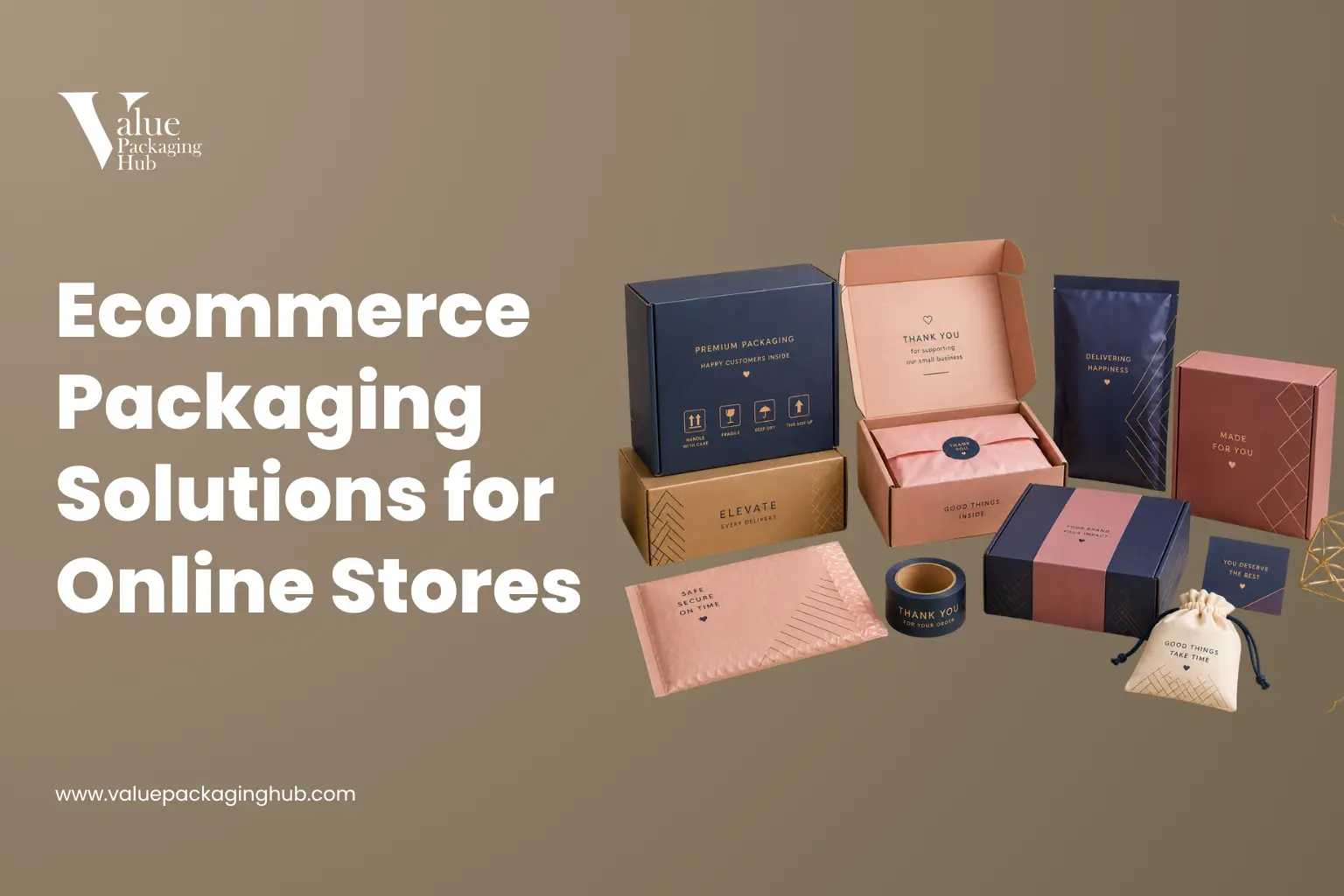
E-commerce shipments: Products wrapped in brown roll for wrapping with brown box tape to secure parcels for transit
Heavy industrial goods: Cement, fertilizers, and chemical products packed in multi-layer kraft sacks
Fragile items: Corrugated kraft used as inner cushioning within boxes to absorb impact
Cosmetics and personal care: Kraft pouches and boxes that balance protection with premium presentation
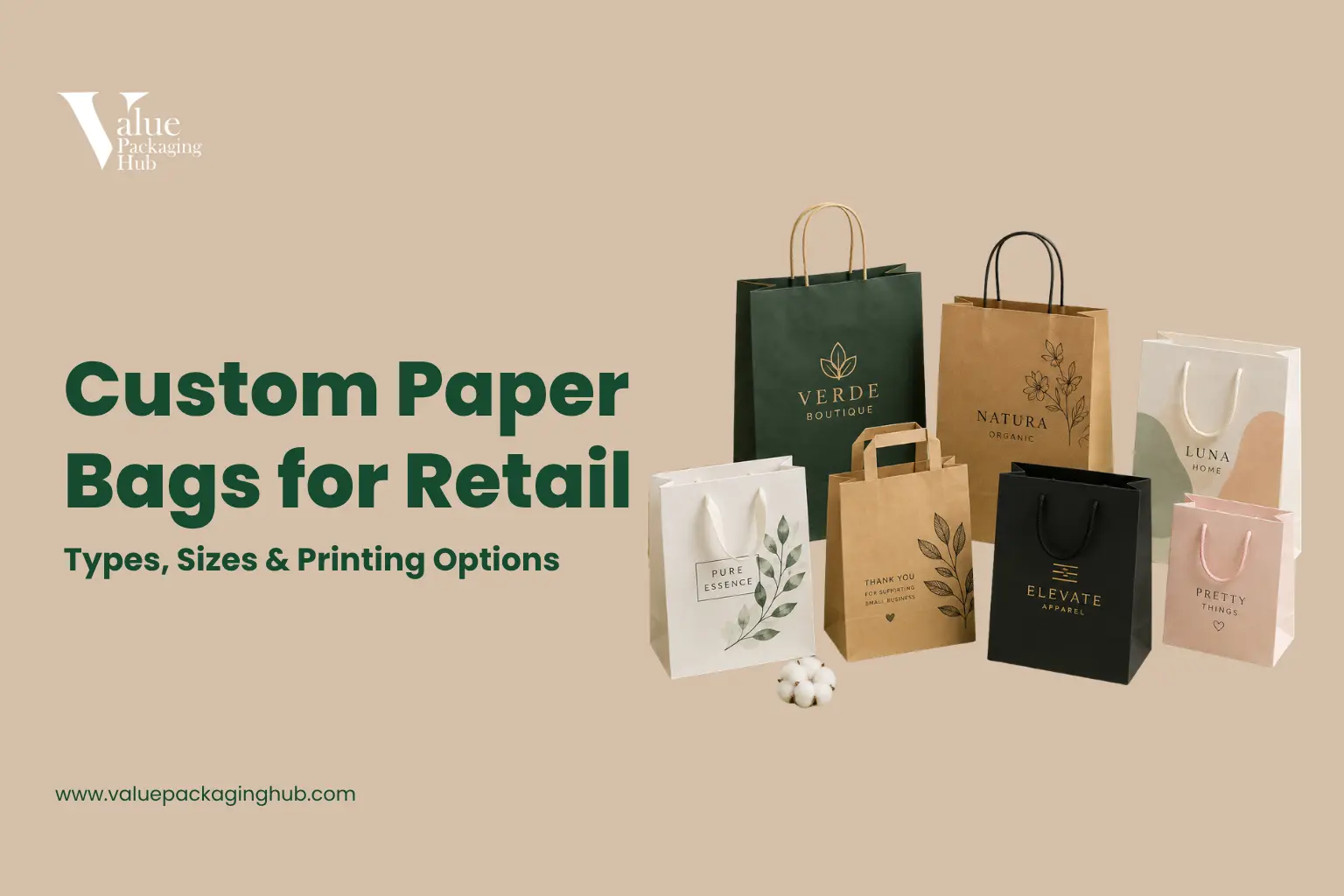
Retail packaging: Custom-printed kraft boxes that carry brand identity while staying biodegradable
If a product needs to be wrapped, cushioned, sealed, or shipped, there’s almost certainly a kraft paper format that can do the job.
Which Industries Use Kraft Paper Packaging Most?
Kraft paper has broad cross-industry appeal, but some sectors have adopted it most aggressively:
Food & Beverage — The food packaging segment accounted for over 45% of the kraft paper market revenue in 2023, driven by the rapid shift away from single-use plastics in restaurants, grocery, and takeout. Value Packaging Hub serves the full Food & Restaurant industry with kraft-based solutions designed for freshness and compliance.
E-Commerce & Logistics — Online retailers rely heavily on corrugated box structures and brown wrapping rolls to protect goods during the rigors of last-mile delivery. Many companies now use kraft paper as filler or wrapping material, successfully replacing bubble wrap and polyethylene foam in e-commerce, electronics, and cosmetics.
Pharmaceuticals — Kraft paper’s neutral pH variant protects sensitive medications from chemical reactions during storage and transit, making it a trusted material in regulated supply chains. Our Pharma packaging solutions are built to meet these exacting standards.
Industrial & Construction — Industrial bags for cement, fertilizers, and chemicals are a leading kraft paper application, valued for durability under heavy-duty conditions.
Automotive — Anti-rust kraft paper, treated with corrosion-inhibiting agents, is used to wrap and protect metal components during long-distance shipping and storage.
Cosmetics & Personal Care — Brands in this space increasingly choose kraft boxes and pouches to align with eco-conscious consumer expectations while maintaining an upscale aesthetic. See how we support the Cosmetics industry with sustainable packaging built for shelf impact.
Kraft Paper Formats: From Brown Roll to Corrugated Box
Understanding the different forms of kraft packaging helps businesses choose what fits their operation:
| Format | Best For |
| Brown roll for wrapping | Wrapping individual items before boxing; void fill |
| Kraft Corrugated Boxes | Shipping medium-to-heavy products; e-commerce fulfillment |
| Brown packing tape / brown box tape | Sealing cartons securely for transit |
| Multi-layer sacks | Heavy bulk goods — agriculture, chemicals, construction |
| Kraft Paper Bags | Retail food, cosmetics, specialty products |
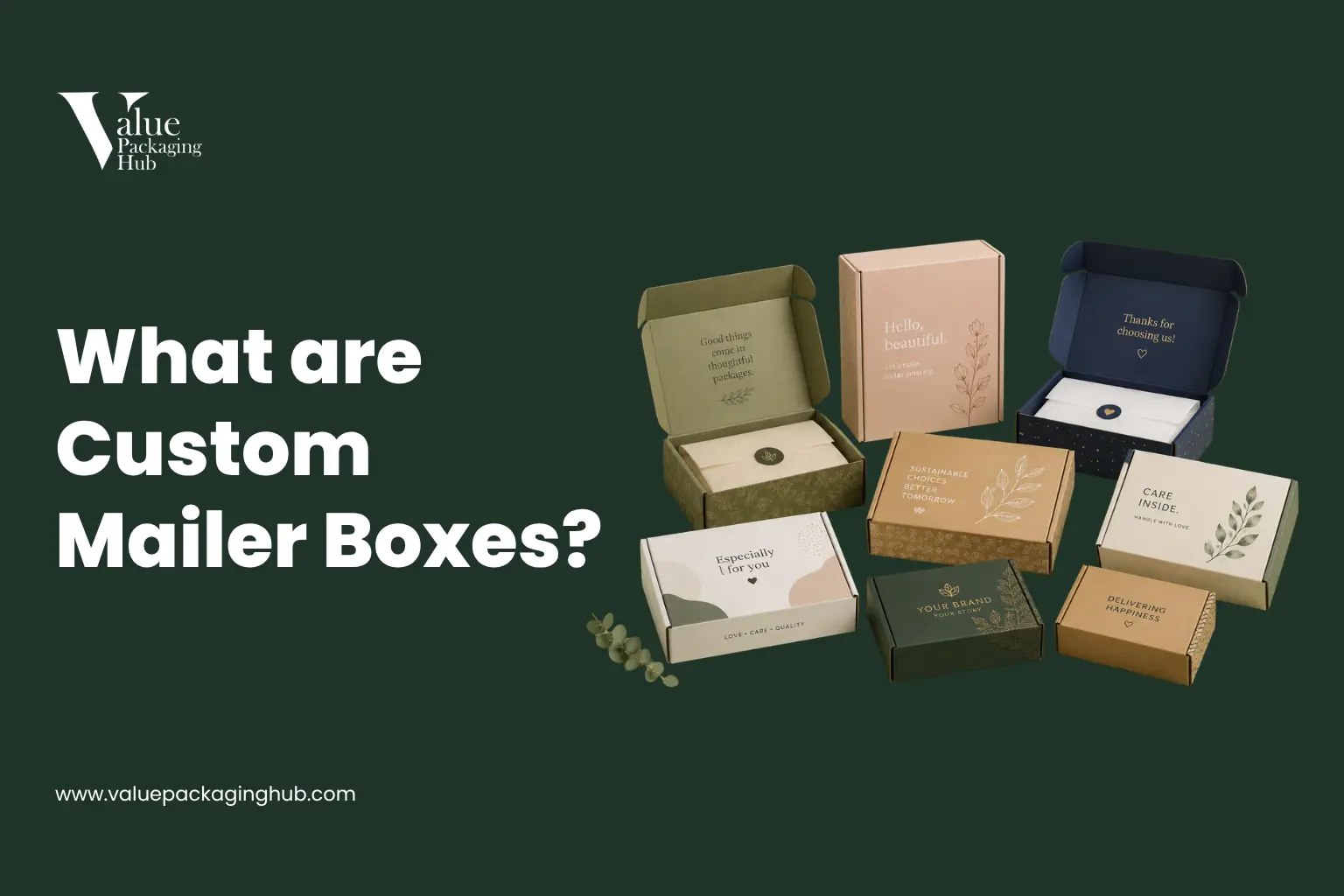
| Kraft Mailer Boxes | Cushioning inside corrugated boxes to prevent movement; e-commerce shipping |
Many businesses use several of these formats together — for instance, wrapping a product in a brown roll for wrapping, placing it in a kraft corrugated box, and sealing with brown box tape — creating a fully kraft-based, fully recyclable shipment. The U.S. EPA’s container and packaging data confirms that paper and paperboard packaging consistently rank among the most recovered materials in the U.S. waste stream, making this approach as practical as it is sustainable.
Conclusion
Kraft paper packaging isn’t just a trend reacting to plastic bans — it’s a proven, durable, and increasingly sophisticated material that meets the demands of modern business logistics while genuinely reducing environmental impact. Modern recycled kraft paper products now offer impressive strength, printability, and adaptability for different sectors, making the sustainability-versus-performance tradeoff a thing of the past. Whether you need a brown roll for wrapping, a corrugated box built for e-commerce, or biodegradable packing materials for industrial shipments, kraft paper delivers on every front. Ready to upgrade your packaging? Value Packaging Hub offers fully customized kraft paper packaging solutions with free delivery across the USA — reach out today to find your fit.