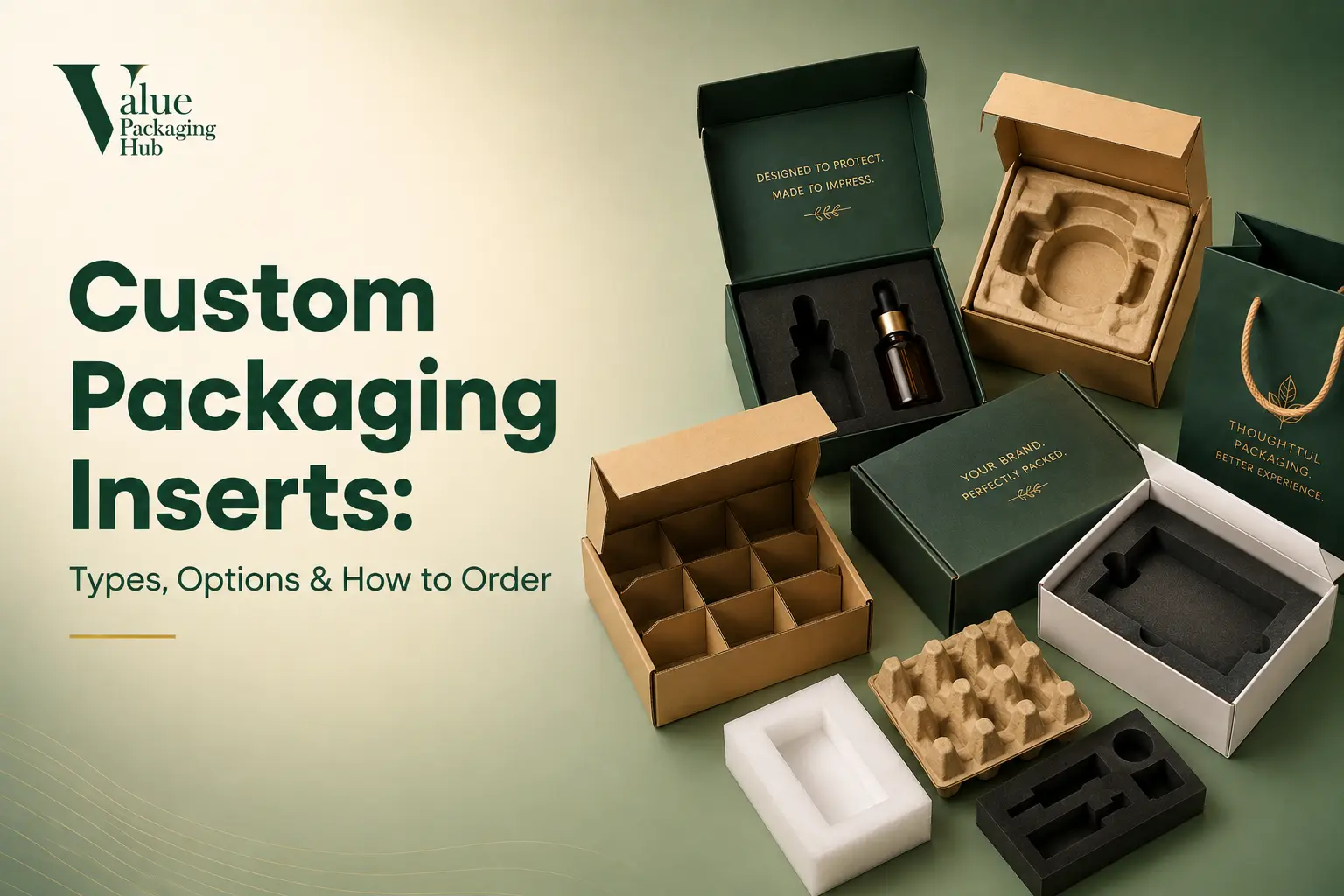
Custom Packaging Inserts: Types, Options & How to Order
A box that arrives intact is the minimum. A box that arrives and impresses — that’s the standard customers remember. Custom packaging inserts are what separates the two. The global foam packaging inserts market alone is estimated to reach $551.8 million in 2025, growing at 3.6% CAGR through 2035 — driven by ecommerce growth and rising consumer expectations for damage-free, premium unboxing experiences. Whether you’re shipping fragile cosmetics, electronics, candles, or jewelry, the right packaging insert protects your product, elevates your brand, and reduces the damage-related returns that cost US businesses billions annually. Here’s everything you need to know.
Key Takeaways
- Packaging inserts are materials placed inside a box to secure, protect, and present a product — they prevent movement during shipping and create a premium unboxing experience.
- The five main types of custom packaging inserts are foam, cardboard, molded pulp, plastic tray, and promotional inserts — each suited to different products and budgets.
- Only paper and corrugated inserts print well — foam, pulp, and plastic do not — making cardboard inserts the preferred choice for brands that want visible branding inside the box.
- North America represented 28.4% of the foam packaging inserts market share in 2025, driven by the robust ecommerce ecosystem.
- Foam inserts provide the highest protection level for fragile goods. Cardboard inserts offer the best balance of protection, printability, and cost.
- Value Packaging Hub offers custom packaging inserts including foam, cardboard, and molded pulp options with free USA delivery, free 3D samples, low MOQ, and discounts on bulk orders.
What Are Packaging Inserts?
Custom box inserts are tailored fittings inside a package that secure a product during shipping — depending on the product, they can be made of foam, cardboard, or plastic. They sit inside your primary box or mailer and serve two distinct functions: structural protection (preventing the product from moving, shifting, or breaking during transit) and brand presentation (creating a clean, organized reveal when the customer opens the box).
There are two broad categories. Protective inserts are engineered purely for product safety — foam, corrugated dividers, and molded pulp all fall here. Promotional inserts are paper-based additions that communicate with the customer — thank-you cards, discount codes, product guides, and loyalty program invitations.
Most brands use both simultaneously. The protective insert holds the product securely; the promotional insert turns the opening moment into a brand conversation.
Types of Custom Packaging Inserts
Packaging Inserts Comparison
| Insert Type | Protection | Printable | Sustainable | Cost | Best For |
| Custom Foam Inserts | ★★★★★ | ❌ No | ★★☆☆☆ | Mid–High | Electronics, jewelry, fragile glass |
| Cardboard Inserts | ★★★☆☆ | ✅ Yes | ★★★★★ | Low | Cosmetics, food, retail, ecommerce |
| Molded Pulp Inserts | ★★★★☆ | ❌ No | ★★★★★ | Mid | Fragile eco-conscious brands |
| Plastic Tray Inserts | ★★★★☆ | ❌ No | ★☆☆☆☆ | Low–Mid | Food, cosmetics, multi-product sets |
| Promotional Inserts | N/A | ✅ Yes | ★★★★☆ | Very Low | All brands — customer communication |
1. Custom Foam Inserts
Custom foam packaging inserts are the gold standard for product protection. Foam inserts are best for protecting fragile items like glass, camera lenses, and jewelry from scratches and scuffs — lightweight and help decrease shipping costs. They are manufactured in two formats:
- Die-cut foam is precision cut to the exact shape and dimensions of your product — creating a snug, form-fitting cavity that eliminates all movement. It provides the highest level of protection available and communicates premium quality the moment the box is opened.
- Pick-and-pluck foam (also called pre-scored foam) features a grid of removable squares that you pull out to fit your product shape — no custom tooling required. It’s a more affordable entry-level option suited for businesses with multiple product sizes or tighter budgets.
The electronics segment remains the largest consumer of foam packaging inserts, driven by the need for anti-static and high-cushion protection for sensitive components. Foam is also widely used by cosmetics, pharmaceutical, jewelry, and luxury goods brands where damage prevention is non-negotiable.
Best for: Electronics, jewelry, glass, candles, medical devices, luxury cosmetics, any high-value or fragile product.
2. Cardboard Inserts for Packaging
Cardboard inserts are strongest when structure and presentation need to work together. Made from paperboard or corrugated board, cardboard box inserts are die-cut into dividers, trays, sleeves, or fitments that hold products securely while offering a full-color printable surface — something foam cannot provide.
Corrugated die-cut inserts may cost a few cents per unit at high volume, making them the most cost-effective structural insert option for ecommerce and retail brands. They’re 100% recyclable, widely available, and compatible with sustainable packaging programs — making them the default choice for brands with environmental commitments.
For cosmetics, food, subscription boxes, and retail packaging where the inside of the box is visible branding real estate, cardboard inserts let you print your logo, brand colors, and messaging directly on the insert surface. Custom cardboard packaging inserts from Value Packaging Hub are available with full print options and free design consultation.
Best for: Cosmetics, food and beverage, subscription boxes, retail packaging, eco-conscious brands, multi-item product sets.
3. Molded Pulp Inserts
Molded pulp inserts — made from recycled paper fiber shaped under pressure — sit between foam and cardboard in terms of protection level. Molded pulp inserts are often chosen when you want formed support with a more fiber-based material direction — they create a custom-shaped cavity like foam but from entirely recyclable, biodegradable material.
Common in egg cartons and wine bottle packaging, molded pulp is increasingly adopted by premium food brands, cosmetics companies, and DTC brands pursuing plastic-free packaging programs. They cannot be printed but carry strong sustainability messaging through their natural fibrous aesthetic.
Best for: Wine and spirits, artisan food products, eco-conscious cosmetics, premium gifting.
4. Plastic Tray Inserts
Plastic tray inserts — thermoformed or injection-molded clear or colored plastic trays — provide excellent product visibility and moisture resistance. Common in cosmetics sets, food sampling boxes, and pharmaceutical packaging, they hold multiple items securely while allowing the product to be seen through the tray itself.
The primary drawback is sustainability — plastic inserts are difficult to recycle and increasingly restricted under US state-level packaging regulations. For brands committed to eco-friendly packaging materials, cardboard or molded pulp alternatives are the recommended substitution.
Best for: Cosmetics gift sets, food sampling, pharmaceutical packaging, multi-product retail displays.
5. Promotional Inserts
Promotional inserts are the highest-ROI addition to any packaging system. Promotional inserts include thank-you cards, discount codes, and instructions — and unlike structural inserts, their purpose is customer communication rather than product protection. They turn the unboxing moment into a retention and referral tool.
The most effective promotional inserts for US ecommerce brands include:
- Thank-you cards — personalised brand messaging that builds emotional connection
- Discount codes — incentivise repeat purchase at the exact moment the customer is most satisfied
- Product instructions or how-to guides — reduce returns by ensuring correct product use
- Loyalty program invitations — convert one-time buyers into repeat customers
- Review request cards — drive Google and social reviews at the highest-satisfaction moment
Best for: Every ecommerce brand — highest ROI of any packaging addition relative to cost.
What to Use as Padding for Packaging
Beyond formal insert types, brands also use these loose padding and void fill materials inside boxes:
- Kraft paper void fill — crumpled or honeycomb kraft paper; fully recyclable, premium feel, widely used as a bubble wrap replacement
- Tissue paper — lightweight, brandable with printing or custom colors; common in apparel, cosmetics, and gifting
- Air pillows — lightweight plastic air-filled cushions for ecommerce shipping; efficient but not recyclable at curbside
- Biodegradable packing peanuts — starch-based loose fill that dissolves in water; eco-friendly alternative to EPS peanuts
For US brands choosing between padding options, kraft paper void fill is the recommended sustainable choice — it’s curbside recyclable, printable with your brand, and delivers a premium tactile experience that air pillows and plastic peanuts do not. For sustainability standards on packaging padding materials, the EPA’s sustainable materials management guidelines provide authoritative US guidance. For recyclability labeling on your inserts and void fill, How2Recycle is the recognized US consumer-facing framework.
How to Order Custom Packaging Inserts: Step-by-Step
- Measure your product precisely — length, width, height, and weight. For foam inserts, also note fragility level and any protruding elements that need individual cavities.
- Choose your insert material — use the comparison table above. Fragile and high-value → foam. Eco-conscious and printable → cardboard. Sustainable formed support → molded pulp.
- Decide on branding requirements — if you want printed branding inside the box, cardboard is your only viable option. Foam, pulp, and plastic do not print.
- Set your quantity — low MOQ orders are available for testing. Bulk orders unlock significant per-unit cost reductions. Value Packaging Hub offers discounts on bulk orders across all insert types.
- Request a free 3D sample — always validate the insert fit, material quality, and unboxing experience with a physical sample before committing to full production. Get a free quote and 3D sample from Value Packaging Hub today.
Conclusion
The right packaging insert does three things simultaneously — it protects your product from transit damage, presents it beautifully when the box is opened, and communicates your brand at the most impactful moment in the customer journey. From custom foam inserts for fragile electronics and jewelry to printable cardboard inserts for cosmetics and subscription boxes, the right choice depends on your product, your brand positioning, and your sustainability goals. Value Packaging Hub supplies custom packaging inserts across all major material types with free delivery across the USA, free 3D samples, free design consultation, low MOQ, and discounts on bulk orders. Get your free quote today.